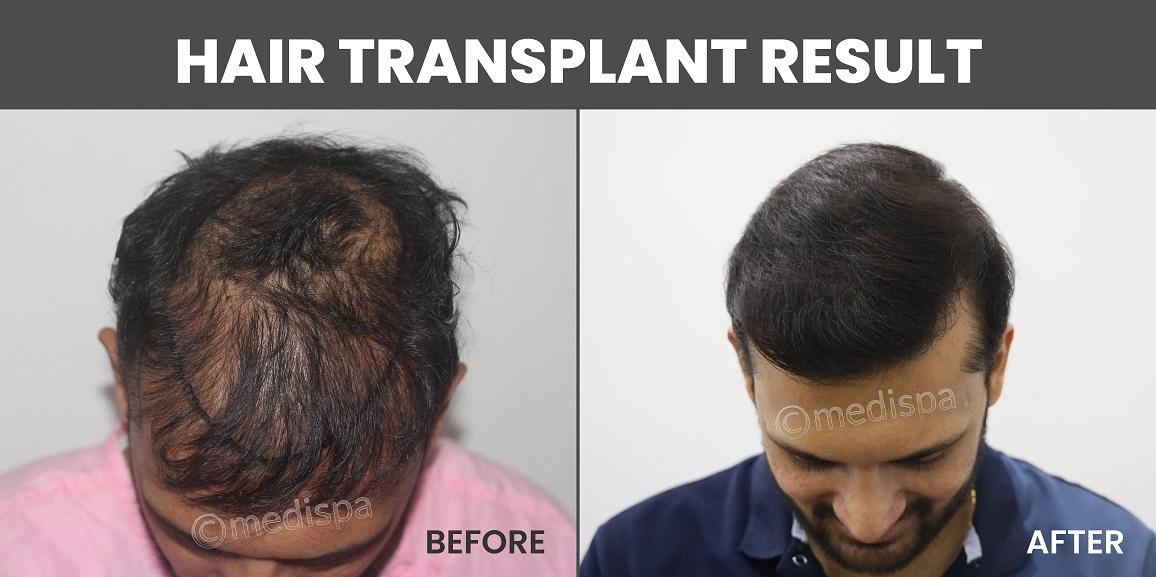
Hair loss has a serious impact on confidence, and it is not just a problem for men. Fortunately, thanks to the best technology in hair transplant in Delhi, now achieving natural results has never been easier. But the thing is, one size does not fit all when selecting the perfect transplant technique.
What’s best for you may not be as good for another. Your degree of baldness, donor area quality, hair texture, and even your individual objectives all factor significantly into what technique is best suited for you.
In this blog, we are going to demystify the most reliable and sophisticated hair transplantation techniques out there today and explain their benefits, limitations, and who they are ideal for, so you can make an informed, confident decision.
Top 3 Hair Transplant Methods You Need to Know
With multiple options available today, selecting the ideal hair transplant technique can be very difficult. Every technique has its own benefits, and the best for you will rely on your stage of hair loss, condition of the donor area, and the goal in mind.
- Follicular Unit Extraction
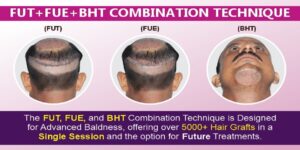
FUE is among the most sought-after techniques today, particularly for people who want minimal downtime and a natural look. In FUE, separate hair follicles are removed from the donor site and implanted in thinning or balding regions.
- It leaves small, dot-sized scars that heal in no time.
- Quick recovery with less pain
- Suitable for scalp, beard, and eyebrow transplants
- Follicular Unit Transplantation
FUT, commonly referred to as the strip technique, entails taking a strip of skin off the donor area (typically the back of the head) and dividing it into grafts. It is best suited for those who require many grafts at one time.
Better adapted for extensive cases of hair loss
Results in a linear scar (typically concealed by longer hair)
The least expensive method for bigger areas
- Direct FUE
Direct FUE is a more recent, more accurate technique where the grafts are put directly into the scalp using a unique instrument (a Choi implant pen). It provides excellent control over angle, direction, and depth.
- Grafts are planted immediately after extraction
- No recipient channels need to be made beforehand
- Usually used for hairline shaping, eyebrows, and small detailed regions
All 3 techniques have their benefits and you should choose based on your requirement also considering the hair transplant cost in Delhi.
How to Select the Appropriate Hair Transplant Technique
The hair transplant procedure will not be the same for all. It relies on a mix of your hair loss situation, your objectives, and medical eligibility.
- If you have a huge bald patch, FUT (Follicular Unit Transplantation) can be better for maximum coverage in one session. When you have small, focal patches, FUE (Follicular Unit Extraction) is the best. And if you are dead-set on FUE, you could always do several sessions with a few months between each.
- Where donor hair is sparse or not very much, FUE is more flexible. It does not have the need to cut out a big chunk of hair, and so it does not leave a significant scar.
- Want to maintain your hair short? FUE is generally the better choice in this case, because the minuscule dot-like scars are hardly even visible, even for close-shaven styles.
- Regardless of which procedure you prefer, the surgeon’s experience matters a lot. No amount of excellent technique will yield a good result if executed poorly. Opt for a clinic that excels in your procedure of choice and do not fall for cheap hair transplant cost in Delhi.
How Hair Transplant Methods Have Improved in 2025
Hair transplants in 2025 are not as they were once. What used to be a simple surgical repair has now evolved into a highly sophisticated, precision-based, and individualized treatment. Due to the newest advancements, hair transplant in Delhi are now more comfortable and provide extremely natural outcomes.
One of the most significant improvements is the application of sapphire-tipped instruments in FUE which enables cleaner cuts and quicker recovery. In direct FUE, the next-generation Choi implanter pens now provide improved control over depth and direction, making it easier for surgeons to replicate a natural hairline.
Robotic systems are also on the scene now, making graft harvesting quicker and more accurate than ever. And with the development of pain-free anesthesia procedures, you can remain totally at ease throughout the process.
And perhaps the most thrilling is the application of 3D hairline simulations, allowing you to see your results beforehand and adjust the ultimate look before even going under the knife.
Overall, hair transplantation in 2025 is not just about restoration; it’s about creating your desired technology and skilled craftsmanship.