
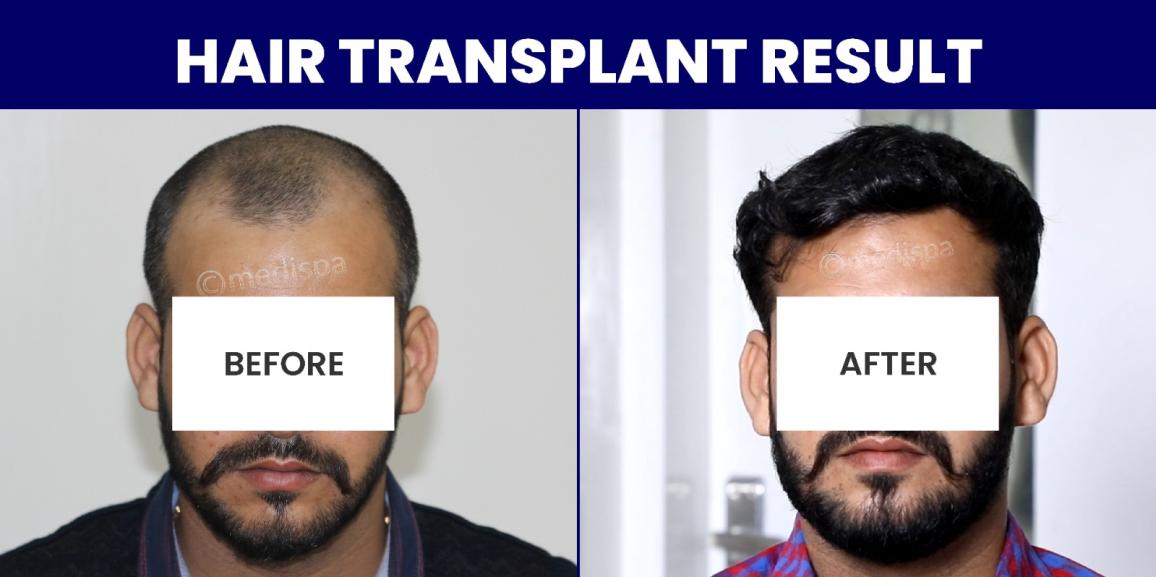
Hair loss can bring a difficult time, particularly when it starts harming your self-confidence and self-esteem. For these people, a hair transplant in Delhi provides an excellent opportunity to not just rebuild lost locks but also rebuild a sense of control over one’s appearance. The outcome can change one’s life, it should be noted that success with a hair transplant is not guaranteed, it involves many variables such as your hair loss distribution, the skill of the surgeon, and compliance with post-surgery instructions.
In this blog, we will deconstruct what hair transplant success rate actually is, what affects it, and what results you can reasonably expect from the procedure. Whether you are just beginning to consider the possibility or already making plans for your treatment, knowing the facts will enable you to make a confident, informed decision. Let’s examine what “success” in a hair transplant actually means.
Overview of Hair Transplant in Delhi
Hair transplant surgery is a well-known and successful option for individuals with baldness or thinning hair. The operation involves transferring healthy hair follicles, typically from the side or back of your scalp, to the thinning or balding areas. This allows new growth to occur in the balding areas with your own natural hair which provides a more natural and permanent outcome.
There are two prominent methods applied: Follicular Unit Transplantation and Follicular Unit Extraction. In FUT, a scalp strip is excised and cut into smaller grafts and in FUE, hairs are taken one by one from each follicle, causing little scarring and providing faster recovery. Both are used extensively and provide excellent results, depending upon the individual needs of the patient.
The success of the entire transplant likewise relies on some key factors such as your overall health, the quality and thickness of your donor hair, and more importantly, the experience and skill of the surgeon who performs the transplant. Selecting the proper method and the proper physician can be all the difference in producing natural and long-term hair restoration.
Patient Factors
Each individual’s scalp and hair condition is unique, and therefore individual characteristics have a significant bearing on the success of a hair transplant. Age, hair loss pattern and stability, general health, and even lifestyle factors can affect how well the transplanted hair will root and grow.
Younger individuals with early hair loss are likely to have better long-term outcomes, provided their state remains stable. Similarly, individuals having good, robust donor hair and a healthy scalp are likely to have more natural reconstruction. Good physical health also enhances quicker healing and lowers the chances of complications following surgery.
Post-Operative Care
Receiving the transplant is just half of the process, how you look after your scalp afterwards will matter the other half. Adhering to your surgeon’s post-operative guidance is essential.
- This typically involves abstaining from heavy exercise, refraining from touching or scratching the grafted region, and taking prescribed drugs such as antibiotics or anti-inflammatories.
- Gently washing your hair and keeping your scalp clean also prevents infection and maintains healthy hair growth.
- Routine follow-up appointments help your physician to observe healing and treat any issues early on.
Closely adhering to their aftercare enhances the result and provides you with more long-lasting outcomes from transplant for patients.
Donor Hair Quality
The success of a hair transplant largely rests on the quality of donor hair, which is most commonly found at the rear or sides of your scalp. These follicles are genetically immune to baldness and, after being transplanted, are likely to continue growing normally.
However, not everyone possesses donor hair of equal strength. Healthier, denser, and thicker follicles tend to thrive through the transplant procedure and integrate well with your existing hair. Your donor area is examined closely by an experienced surgeon prior to the procedure to see if it is a good candidate and to see how many grafts will be safe to remove. The graft examination is also important to define the hair transplant cost in Delhi.
How To Measure the Hair Transplant Success
A hair transplant success is not about seeing results right away, it’s knowing the phases of growth and what to expect during healing. One of the first indicators that everything is going well is initial shedding, which generally occurs within the first three weeks or so. Although it might be alarming, it’s perfectly normal. New hair growth usually begins approximately 3 to 4 months following surgery, with noticeable improvement at 6 to 9 months.
One other significant indicator is the evenness of hair density. The transplanted site should fill in slowly with no patchy or bald areas. If the hairline transitions smoothly into your original hair and is appropriate for your face, it’s an indication that the transplant was performed with both technical proficiency and aesthetic sense.
Scarring is also a consideration, particularly with FUE, as very little visible scarring should occur. Any such marks should be barely detectable, especially after your hair has grown out.
If you are experiencing steady growth after 6 month of the hair surgery, even distribution, and no serious complications, then you can be sure your hair transplant was successful.